Weather at the 5th Station: the numbers and the clouds
The arithmetic worth memorising
Take the forecast for the base, subtract about 6 °C per 1,000 m of height, and you have the mountain’s weather. The 5th Station stands at 2,305 m, so a pleasant 30 °C summer day below becomes a 16 °C day on the terraces, and about 7 °C at the top of the trail. The summit’s annual average is −7.1 °C, which should end any argument about packing. What that means for your bag is on what to wear.
The cloud deck, honestly
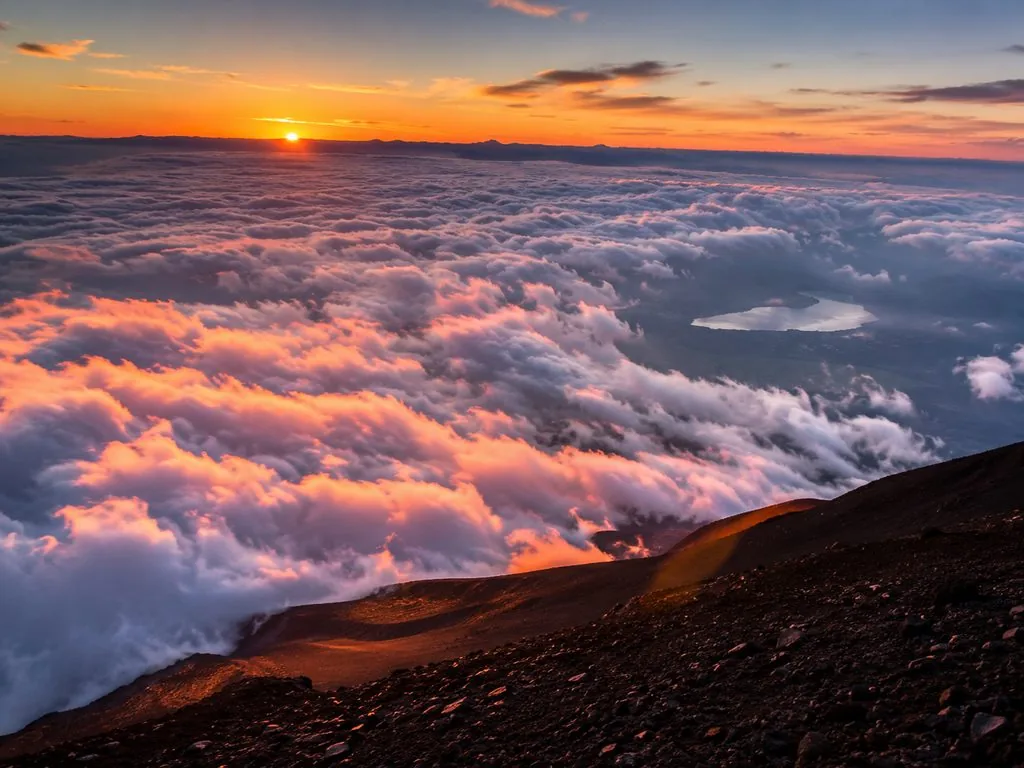
Clouds on Fuji form in a layer, and 2,305 m is often inside it. From below, the mountain wears a grey belt; from the station, the world is white. Visibility is best in winter and worst June to August, when rainy-season humidity wraps the mountain for days — and those are exactly the months the climbing season runs and the tour buses fill. A reviewer of the Hakone viewing tour wrote, verbatim: “Jack was our guide and he was amazing. We had a wonderful trip and saw many great sites. We were in the 10% that actually saw the summit of Mount Fuji.” Her arithmetic is anecdote, not measurement, but nineteen summers up there tell me the spirit of it is right for a humid week.
Reading a day for a view
Early morning is the reliable edge: roughly 6 to 8 am is the clearest window before the day’s cloud builds. Cold, dry days beat warm, humid ones in any month. And the geometric rule still holds no matter how clear the air gets: from the station you will never see the cone you came to photograph, because you are standing on it — the full explanation. The month-by-month strategy is on best time to visit.
What I do when the mountain is socked in
At the station: the Komitake shrine, a warm melon bread, a slow meal — the cloud-proof hour. Below the deck, the viewing spots sometimes sit under clearer air than the slope does, and the loop tours work Oishi Park, Lake Kawaguchi and Oshino Hakkai whatever the summit is doing — the mountain simply may not attend. The viewing tours are priced from $49, and their reviews are full of guides gracefully managing a hidden mountain.
Check the base forecast the night before, subtract your 6 °C per 1,000 m, and dress for the station rather than the city. If the morning dawns humid and warm in Tokyo, lower your expectations of the view and raise them for the melon bread.
Frequently asked questions
How cold is the Mt Fuji 5th Station?
About 6 °C cooler per 1,000 m than the base: a 30 °C day below is roughly 16 °C at 2,305 m, with wind on top of that. The summit averages −7.1 °C across the year. Dressing for it is covered on what to wear.
What month is Mount Fuji least visible?
The June-to-August stretch, when rainy-season humidity and cloud wrap the mountain for days — the same months the climbing season runs. Winter is the clear season, and the trade is explained on best time to visit.
Are you lucky if you see Mount Fuji?
Japanese culture says yes — a clear view of Fuji is traditionally good luck, which tells you how often it hides. Early morning, roughly 6–8 am, is the honest way to improve your luck — more on can you see Fuji.
Do tours run when the 5th Station is in cloud?
Yes. The road closes for weather, not the cloud deck, and when the Subaru Line does shut, the flagship loop substitutes lower stops — my review covers how that day actually plays out.