What to do at the 5th Station, from a man who worked there
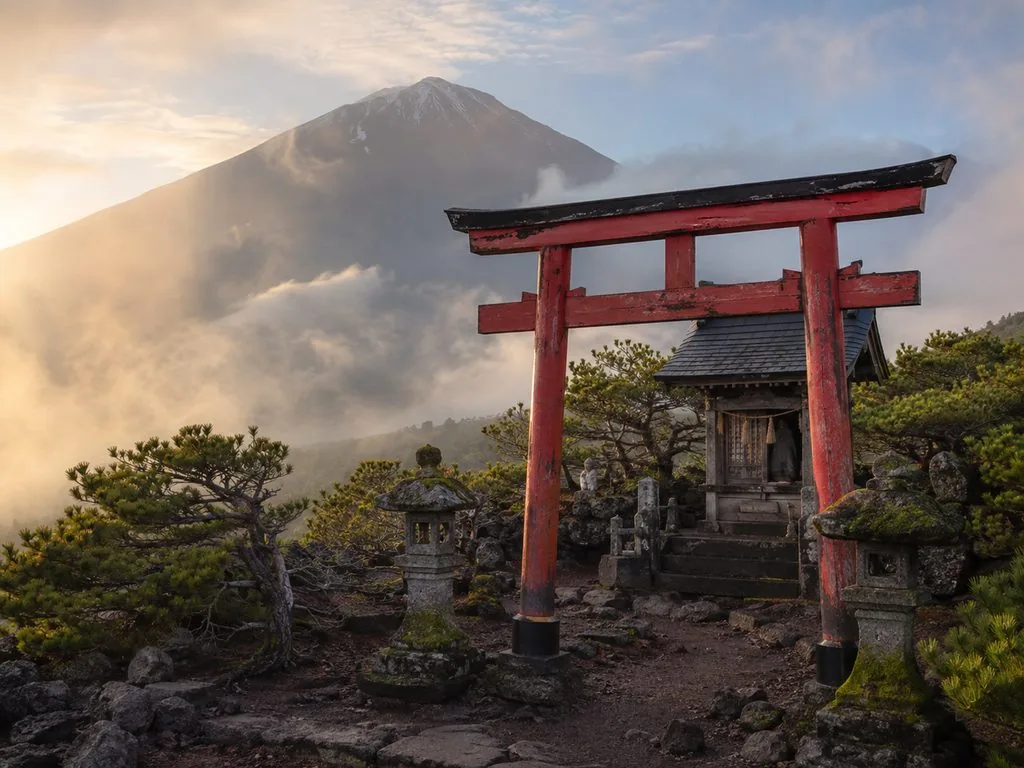
Start with the shrine
The Fujisan Komitake Shrine sits a short walk from the shops, small and usually quiet while the terraces fill with tour groups. Fuji has been worshipped for centuries — the Sengen shrines stand at its foot, and the mountain has been a UNESCO Cultural World Heritage site since 2013 — and this little shrine is where that history actually touches your visit. Climbers stop here before the trail; so should you. More on the Komitake shrine page.
Eat the melon bread
The station’s famous snack is melon bread — a crisp-topped sweet bun, best warm, sold from the food stalls. The restaurants do full meals, and on a cold day at altitude a hot bowl earns its price in a way no guidebook line can convey. The shops carry the usual range from hiking sticks to boxed sweets, and the coin lockers matter more than they sound if you came with luggage between hotels.
Look down, then look up
On the right day the terraces give you the sea of clouds below and the summit cone above. I say “on the right day” deliberately: the station sits inside the cloud layer often, and no schedule dodges that. What the view can and cannot be is covered on can you see Fuji and weather and clouds. On a socked-in day the shrine, the stalls and the shops are the visit — and they hold it.
The hour that is really acclimatisation
The standard advice, and it is good advice, is to spend an hour or two at the station before climbing anywhere. At 2,305 m the air is already noticeably thinner, and the body appreciates the pause — about 30% of Fuji climbers report at least mild altitude sickness, a number I saw walk past my desk every season. Even if you never set foot on the trail, treat the slow wander as the point rather than the delay. The details are on altitude sickness, and the climb itself on climbing from the 5th Station.
Bring a warm layer even in August. The quick arithmetic: a 30 °C day at the base is roughly 16 °C at the station, and the wind does not care what month it is. What to wear is its own page — /what-to-wear/ — and worth two minutes before you pack.
Getting an hour up there without planning it yourself
Most visitors arrive on a bus loop that gives the station about an hour — enough for the shrine, the bread and the terraces. The flagship loop at $151 pairs it with a Lake Ashi cruise, the Hakone ropeway and a bullet-train return, road and season permitting.
Frequently asked questions
How long should I spend at the Mt Fuji 5th Station?
An hour or two covers it honestly: the Komitake shrine, the shops, the melon bread, the terraces. Climbers should treat that hour as acclimatisation before the Yoshida Trail — the climb, explained.
What food is the 5th Station known for?
Melon bread from the food stalls — a crisp-topped sweet bun, best eaten warm at altitude. There are proper restaurants too, which matter on a cold day. The full inventory of the station is part of whether the trip is worth it.
Is there anything to do if the clouds close in?
Yes, and you should plan for the possibility: the shrine, the shops and a slow meal are cloud-proof. The station sits inside the cloud deck often — how often, and when.
Are there lockers and toilets at the 5th Station?
Both — coin lockers for luggage and public toilets at the station. On the trail above, toilets exist at the huts and the summit. How to reach the station in the first place is on getting there.